Picture this: It’s been a hard day at work. Your boss is on your back about a project, your nagging coworker hasn’t gotten the hint that you don’t want to hang out, and you are one rude customer away from quitting and never looking back. All you want to do is go home, curl up on the couch, and watch your favorite show about… work? Ever since the success of The Dick Van Dyke Show (1961), our televisions have been flooded with stories of the workplace whether it be a grocery store, a paper company, or a Blockbuster (why does this exist?). This sitcom genre accounts for some of the most popular series of all time, but why?
Depicting Our Relationship with Work:
When creating a workplace comedy, it is important to factor in how society views work. When sitting through old reruns on TVLand, it becomes very clear that this genre of sitcom is heavily influenced by how the average person felt about their job at the time.
The Mary Tyler Moore Show (1970), which follows coworkers at a local news station in Minneapolis, focused greatly on what it was like to be a woman in the workplace in the 70s. The main character, Mary, challenges her crass boss during her hiring process by calling out his illegal questioning, disavowing his insistence on the wage gap, and displaying an overall “spunk” that lands her job. This was groundbreaking at the time, and still feels relevant today, because the writer chose to depict how women were feeling as they began joining corporate workspaces in higher numbers. Throughout the series, Mary goes on to gain the respect of her boss and coworkers and together they form a close-knit work family.
The idea of a work family continues on in most all workplace sitcoms, but is incredibly notable in Cheers (1982). The bar, led by Sam Malone, starts feeling less like a job and more like a second home – a place where everybody knows your name, if you will. Regular customers become friends, coworkers become lovers, and a sense of fulfillment is derived out of a good day’s work.
Taxi (1978), gives voice to a different opinion. Instead, we are presented with a far more gritty group of cabbies in the heart of Manhattan. Their leader, Alex Reiger, is the only worker at his job who considers himself a cabbie by profession. Meanwhile, his coworkers see the job as a temporary step on the ladder to bigger and better things. The heart of this series is built on that sentiment, often creating situations where characters nearly reach the next stage of their professional lives, only for it to fall through in one way or another. Seeing characters express their aspirations outside of their current job brought on conversations about identity, questioned work loyalty, and gave representation for those that dare to dream for something bigger.
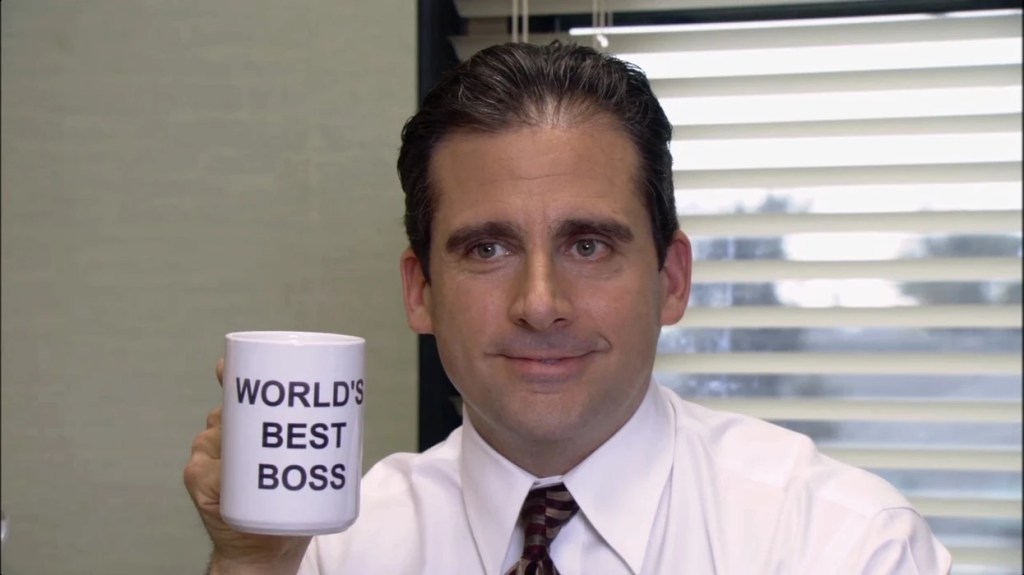
In the 90s, films such as Clerks and Office Space began to question why we voluntarily throw our lives away to our jobs, which can oftentimes feel meaningless. This line of thinking led to the creation of arguably the most influential show of this century (and maybe all time), The Office (2005). This series “documented” the daily shenanigans that came about at the Dunder Mifflin Paper Company. Instead of creating a work environment where professionalism and opportunity are valued, most of the characters are jaded and see no reason to lie about their situation: work is boring, coworkers are annoying, and the end of the day cannot come soon enough. What keeps this series so entertaining is that the workers find small pockets of humor and joy in truly one of the dullest environments imaginable.
This leads us into the current day, in which we are actively redefining our relationship with work more than ever. Series like Abbott Elementary (2021) promote the idea that a great attitude and actual effort can change the lives of everyone in the workplace for the better. Meanwhile, series like Superstore (2015) highlight how work should never be taken too seriously because there are always going to be obstacles outside of your control. There has yet to be, in my opinion, a workplace sitcom that fully captures the identity of the American worker in a post-pandemic world, so get to it, writers!
Who’s Really in Charge?
Bosses, coworkers, corporate overlords, and interns. All are cogs in the workplace machine that keep the company alive – even if it seems they actively work against success. While these titles imply a certain level of (in)experience, we are dealing with the sitcom world – everything is out the window! The foundation for most workplace sitcoms is the fight for professionalism between either a competent boss and their incompetent workers or vice versa. This fight is often the backbone of a series and provides a great framework for running gags and storylines.
Competent Boss vs. Incompetent Coworkers:
This work dynamic is what one would expect from a series of this genre. It gives the viewer a peek into what it is like to have a higher level of agency in the workplace, as the main character of a series usually falls into the competent camp.
An example of this dynamic is Liz Lemon in 30 Rock (2006). As the head writer for The Girlie Show, Lemon regularly has to spend full episodes wrangling together the cast, crew, and writers while also taking notes and ridiculous requests from her own boss, Jack Donaghy. In this situation, Lemon is (mostly) the voice of reason and the big win at the end of the day is that she successfully juggled all the moving parts of her hectic work environment.
Incompetent Boss vs. Competent Coworkers:
Arguably the more popular of the two, this dynamic allows the viewer to see themselves represented. It is a widely held sentiment that the average worker is better at a job than their boss (any Undercover Boss fans?). Incorporating this into a workplace sitcom gives the viewer proof of that belief, even if subconsciously. It also provides plenty of opportunities for the lower positioned characters to shine, because they have to pick up the slack.
A notable example of this dynamic is between Janine Teagues and Principal Ava Coleman in Abbott Elementary, who in the pilot episode uses school funds to purchase a sign of herself despite the school majorly lacking resources required to teach children properly. Ava’s recklessness frequently has to be balanced out by the teachers. The teachers at Abbott are the adults in the room, leaving them no option but to take charge if they want to actively see change.
The Romance
An aspect of workplace sitcoms that always sneaks its way into the storylines is a snail-paced romance between two coworkers. Romance is commonly used in workplace comedies to add depth to characters and, most importantly, create potential storylines. This relationship is most often hinted at in the pilot episode as to plant roots for the couple to be. Typically, characters will not get fired regardless of how bad they are at their jobs, so adding a relationship to the mix adds stakes for the characters and viewers. Any romantic relationship needs to be seen by the writer as a contract with the audience. It is a guarantee that the show is, in fact, building towards something. Whether the relationship sticks it out for the whole series or falls short, it certainly will draw in fans who want to see how the “will they won’t they” ends.
What makes these storylines so compelling is that they normally occur between the two most level-headed characters of the main cast. What makes a relationship so special in workplace sitcoms is that they are seemingly innocent at the start. This is not a bar where two people are looking for a partner. It’s work! The coworkers are all forced to be together, but how does the dynamic of the group change when two of them want to be in each other’s company? An example of this is Jim and Pam in The Office, though their dynamic is made even more interesting due to the fact that the latter is already in a serious relationship in the pilot.
“Who’s the New Guy?”
To grab the viewer’s attention and get them invested in a series, you must make them fall for the characters. How can we, as writers, introduce the audience to this new world and its inhabitants? Throw in a new hire! Seriously, I watched hours of pilots to prepare for this post and only one of them did not include a new member to the work family, RENO 911! (2003).
This technique was brilliantly utilized in the pilot for Scrubs (2001) because the new hire also happens to be the main character of the series. The pilot follows J.D. on his first day working at Sacred Heart Hospital. Through his perspective, the audience learns about the job, the coworkers, and the boss. What makes this situation special is that the audience learns about these things with J.D. and not just from him. It makes the experience feel fresh and creates a natural drop-in for the series to build from.
Other examples of the new hire inclusion are Maya Gallo in Just Shoot Me (1997), Caroline Channing in 2 Broke Girls (2011), and Captain Holt in Brooklyn Nine-Nine (2013).
Why Are We Obsessed?
So, what about these series coaxes an audience into spending their free time watching a show about working? I would argue that it is because the workplace sitcom turns an environment that most dread into a playground. These characters, whether they admit it or not, love what they do. Instead of moping around and complaining about how much work sucks, they make the most of it! They can quit at any time, but something stops them from getting a different job. The job, if written well, is equal parts torture and entertainment for viewers and characters alike. Every harmless prank, inside joke, and friendship turned romance makes the workplace feel alive. When a character fails, it’s funny. When they succeed, it’s inspiring. When they form a community, we feel included.
The workplace sitcom preaches to audiences that working should be fun and exciting. These series make a promise that playfulness can be found even in the most mundane places possible.
-Cody
 How We Write
Leave a reply to Anatomy of the Sitcom: The Roommates – How We Write Cancel reply